

Guided Meditation Therapy In Vaughan, Toronto & Richmond Hill
Healing Through Trauma-Informed Meditation
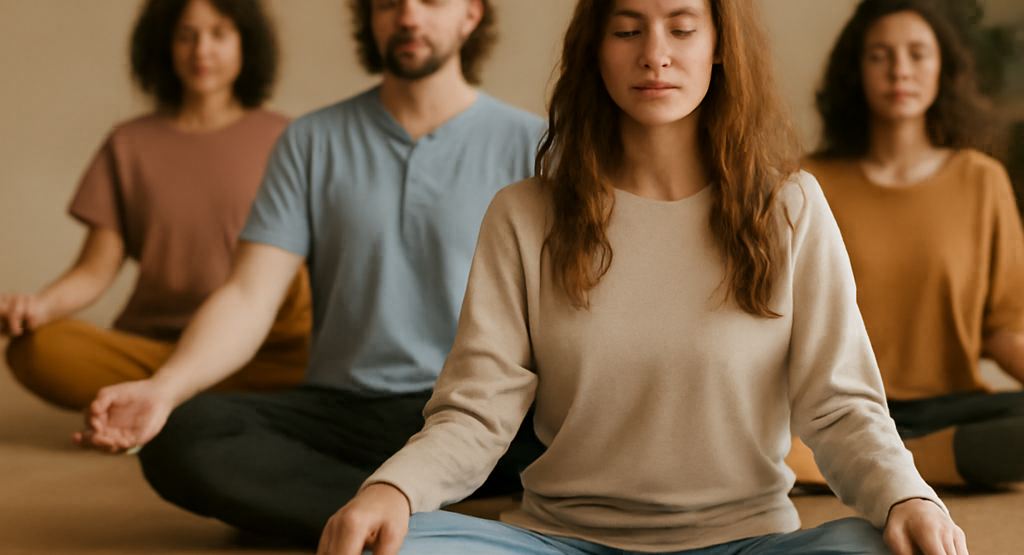
Our brains don’t change through conversation alone. They rewire through experience; through doing, sensing, and feeling in the body. Trauma-informed guided meditation creates space for this kind of change, where calm isn’t just practiced privately, but felt together. And when stillness is shared, it often deepens.
Meditation is not one-size-fits-all. Different nervous systems need different doorways into safety and regulation. Group guided meditation offers a gentle way to discover your own rhythm—to explore practices that actually work for you, rather than forcing yourself into a technique that doesn’t fit.
At Inner Summits, we don’t believe meditation is about “emptying your mind” or “doing it right.” It’s about giving your nervous system a chance to reset with the added healing power of community.
What Is Guided Meditation Therapy?
Guided meditation therapy blends structured meditation with therapeutic support in a group setting. Unlike meditating alone at home, group practice creates a shared rhythm—where breath, awareness, and presence ripple across the room, quietly reminding you that you are not alone.
Sessions are facilitated by trained psychotherapists and may include:
-
-
Mindfulness practices to anchor you in the present moment
-
Somatic awareness to shift physiology and release held stress and tension
-
Breathwork techniques to support nervous system regulation
-
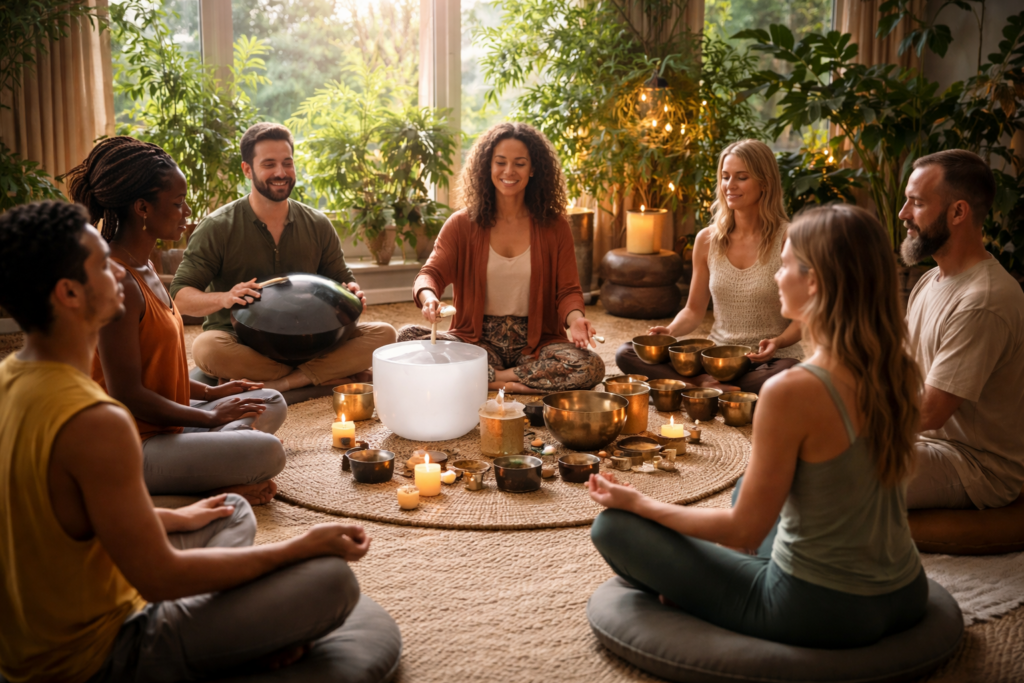
Sound and music to gently guide the mind and soothe the body
-
Therapeutic reflection to integrate insights into everyday life
-
Expert guidance with practical tips to help meditation work with your nervous system—not against it
-
This is not about striving for calm.
It’s about creating the conditions where calm can naturally emerge—together.
What is NeuroMeditation?
Meditation isn’t a single technique, it’s a state of consciousness. Different meditation practices shift the brain in different ways. At Inner Summits, we know that each brain and each physiology has its own unique needs. That’s why we help clients personalize and maximize the type of meditation they use, rather than forcing a one-size-fits-all approach.
One of the key players here is the Default Mode Network (DMN): the part of the brain that lights up when your mind is wandering, self-referencing, or looping in thought. The DMN isn’t “bad”, but when it’s overactive, it can feed rumination, anxiety, and a stuck sense of self. Each meditation style retrains the brain and DMN is a different way. For example:
-
- In focus, mindfulness, and quiet-mind meditation, the DMN is quieted. This helps reduce overthinking, rumination, and self-criticism.
- In open-heart meditation, the DMN is actually recruited in a healthy to generate self-compassion, gratitude, and loving connection.
By understanding these differences, we can guide clients to the practice their nervous system needs most. To learn more about the science behind different meditation styles, visit the NeuroMeditation Institute.
Types of Guided Meditation in Group Therapy
1. Focused Attention Meditation: Training the brain like a muscle—you pick one object (like your breath or a mantra), notice when your mind drifts, and gently bring it back.
-
-
- Brain Effect: Strengthens attention, executive functioning, and visual processing. Increases Beta2 and Gamma brain waves.
- Benefit: Improved focus, reaction time, and memory.
- Best For: ADHD symptoms, active depression, mild traumatic brain injury, performance optimization.
-
2. Mindfulness Meditation (Open Monitoring): Observing thoughts, sensations, and feelings without judgment—allowing them to rise and pass like waves without clinging or resisting.
-
-
- Brain Effect: Builds the brain’s “observer mode,” calming hyperarousal and reactivity.
- Benefit: Greater acceptance, patience, and stress tolerance.
- Best For: Anxiety, stress, chronic pain, rumination, hyperarousal states.
-
3. Quiet Mind Meditation (Automatic Self-Transcending): Moving beyond thought into stillness. You may begin with a mantra, but the practice naturally leads to deep quiet—it can’t be forced, only allowed.
-
-
- Brain Effect: Downregulates the DMN, reducing internal self-talk and overthinking. Leads to “restful alertness.”
- Benefit: Profound relaxation and mental clarity.
- Best For: OCD symptoms, eating disorders, addictive behavior, chronic pain, anxiety.
-
4. Open-Heart Meditation: Focusing on love, compassion, gratitude, or forgiveness toward yourself, others, or the world.
-
-
- Brain Effect: Intentionally uses the DMN to generate positive emotional states and increase left frontal lobe activation (linked with happiness).
- Benefit: Increases empathy, self-compassion, and perspective.
- Best For: Anger, grief, resentment, depression symptoms.
-
5. Altered State Meditation: Drawing from research on psychedelic medicine, this practice promotes deep flexibility, creativity, and emotional openness.
-
-
- Brain Effect: Decreases overactivity in the DMN, loosens rigid patterns of thought, increases cross-brain communication.
- Benefit: A sense of “afterglow,” creativity, and release from defenses.
- Best For: Trauma, rigidity, creative blocks, emotional stuckness and release.
-
Trauma-Informed Meditation Practice
Not all meditation is safe for everyone, especially for those with trauma. Sitting in silence or tuning into the body can sometimes feel overwhelming or triggering. That’s why our NeuroMeditation approach is trauma-informed:
-
- Choice-Based: Clients are never forced into one type of meditation—options and pacing matter.
- Body-Aware: We integrate grounding and somatic practices so clients don’t get lost in overwhelming states.
- Safe Container: Sharing the space with a therapist and group helps regulate difficult emotions if they arise.
- Gentle Integration: Each meditation is followed by grounding and reflection, so insights are connected to daily life in a safe, embodied way.
Frequently Asked Questions About Meditation Group Therapy
1. Do I have to sit completely still to meditate?
Not at all. Many people picture meditation as sitting cross-legged in silence, but that’s just one form. In our groups, meditation may include gentle movement, breathwork, visualization, or open-heart practices. Sometimes it’s about noticing the sensations in your body, sometimes it’s about focusing on a mantra, and sometimes it’s about simply resting into stillness. We help you find the approach that works for your body and your nervous system.
2. Is meditation the same as therapy?
Meditation itself is not therapy but when guided by a psychotherapist in a supportive group, it becomes a therapeutic practice. Meditation changes brain states, but therapy helps you integrate those changes into your life. At Inner Summits, we combine both: bottom-up practices that shift your nervous system, with gentle therapeutic reflection that makes the changes last.
3. Can meditation help with trauma?
Yes, but it needs to be done in a trauma-informed way. For some trauma survivors, sitting in silence can feel overwhelming or triggering. That’s why our groups emphasize safety, pacing, and choice. We use grounding techniques, body awareness, and co-regulation so that meditation feels stabilizing rather than destabilizing. Over time, meditation can help calm hyperarousal, reduce flashbacks, and rebuild a sense of safety in the body.
4. Do I need prior meditation experience?
No experience is needed. Whether you’re brand new or have tried meditating before, each session is guided step by step. Our approach meets you where you are.
5. What makes group meditation different from meditating alone?
When you meditate alone, it can feel hard to stay focused or discouraging if your mind wanders. In a group setting, the collective energy helps anchor you. The nervous system naturally co-regulates, meaning your body syncs with the calm of those around you. Group sessions also provide support, accountability, and community… a reminder that you don’t have to do this journey alone.
6. What if I can’t “turn off my mind”?
Good news: meditation is not about stopping your thoughts. It’s about changing your relationship to them. If your mind wanders, you’re doing it right because the practice is in noticing, and gently coming back. Over time, this builds focus, calm, and resilience.
7. How does meditation affect the brain?
Different practices have different impacts:
-
- Focus meditation strengthens attention and concentration.
- Mindfulness builds the ability to observe without judgment.
- Quiet mind meditation calms internal chatter.
- Open-heart meditation activates compassion and gratitude.
- Altered-state practices expand flexibility and creativity.
All of them reshape the Default Mode Network (DMN)—the brain system linked with self-talk, mind wandering, and rumination. By quieting or redirecting the DMN, meditation reduces stress and opens space for healing.
8. What if I feel emotional during meditation?
That’s normal. Sometimes when the nervous system feels safe enough to soften, emotions rise to the surface. Our groups are facilitated by psychotherapists trained in trauma-informed care, so you’ll have support and grounding if strong feelings come up. Sharing in community also helps normalize the experience—you’re not alone in it.
Join Our Meditation Group
Healing doesn’t have to happen in isolation. In our meditation groups, you’ll find both inner stillness and community support—two of the most powerful ingredients for lasting change. Reach out to us to explore more.
Get Matched with a Therapist.
Because finding support should never be as hard as what you’re going through.